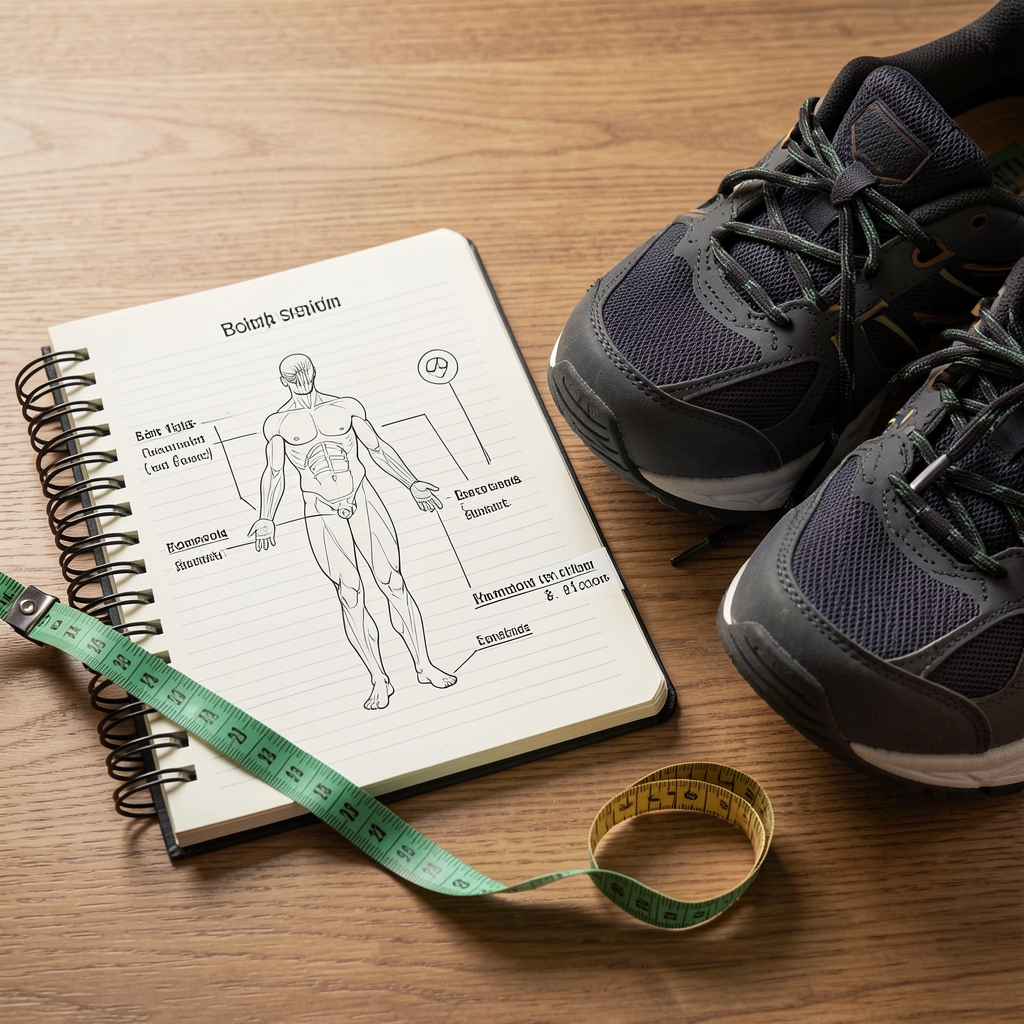
Body composition is a useful way to describe the relationship between fat, muscle, bone and water in the body. After 40, many people notice that familiar routines no longer produce familiar patterns. This does not point to one single cause. Ageing, work, sleep, food access, movement, stress and changing responsibilities can all overlap. An informed reading of the research therefore starts with context rather than a neat before-and-after story.
What changes over time
Muscle tissue can gradually become less responsive to ordinary daily activity when resistance work is absent. At the same time, work that involves sitting, commuting and caring responsibilities may reduce incidental movement. These shifts are often subtle, accumulating across months and years. The scale may therefore tell only one part of the story.
Energy use and daily context
Energy expenditure reflects body size, movement, food processing and resting needs. When activity changes, food intake may not change at the same pace. Sleep disruption and a busy schedule can also influence appetite and meal timing. Research discussion is strongest when these influences are considered together rather than assigned to a single nutrient.
Why distribution matters
Body fat is not distributed identically across life. Genetics, age, hormones and activity all contribute to individual patterns. A tape measure, clothing fit, strength markers and general wellbeing may provide useful context alongside body weight. None of these measures gives a complete portrait alone.
A realistic reading of the evidence
Body composition is a moving picture, not a verdict on a person.
Studies indicate that regular movement, sufficient food quality, adequate protein and strength-focused activity can all be relevant parts of a balanced lifestyle. The appropriate mix varies with preferences, access, previous experience and personal circumstances. A qualified professional can help interpret questions that relate to an individual situation.
Key takeaways
- Body composition reflects several interacting influences.
- Weight alone cannot describe muscle, fat, bone or water.
- Small changes in routine may accumulate over time.
- Evidence is best read alongside individual context.
This article is for informational purposes only and does not constitute medical advice. Always consult your GP or a qualified healthcare professional before making changes to your diet, supplements, or lifestyle. Graltov accepts no responsibility for actions taken without professional medical guidance.
Related reading
Protein Intake and Muscle Preservation · The Role of Strength Training