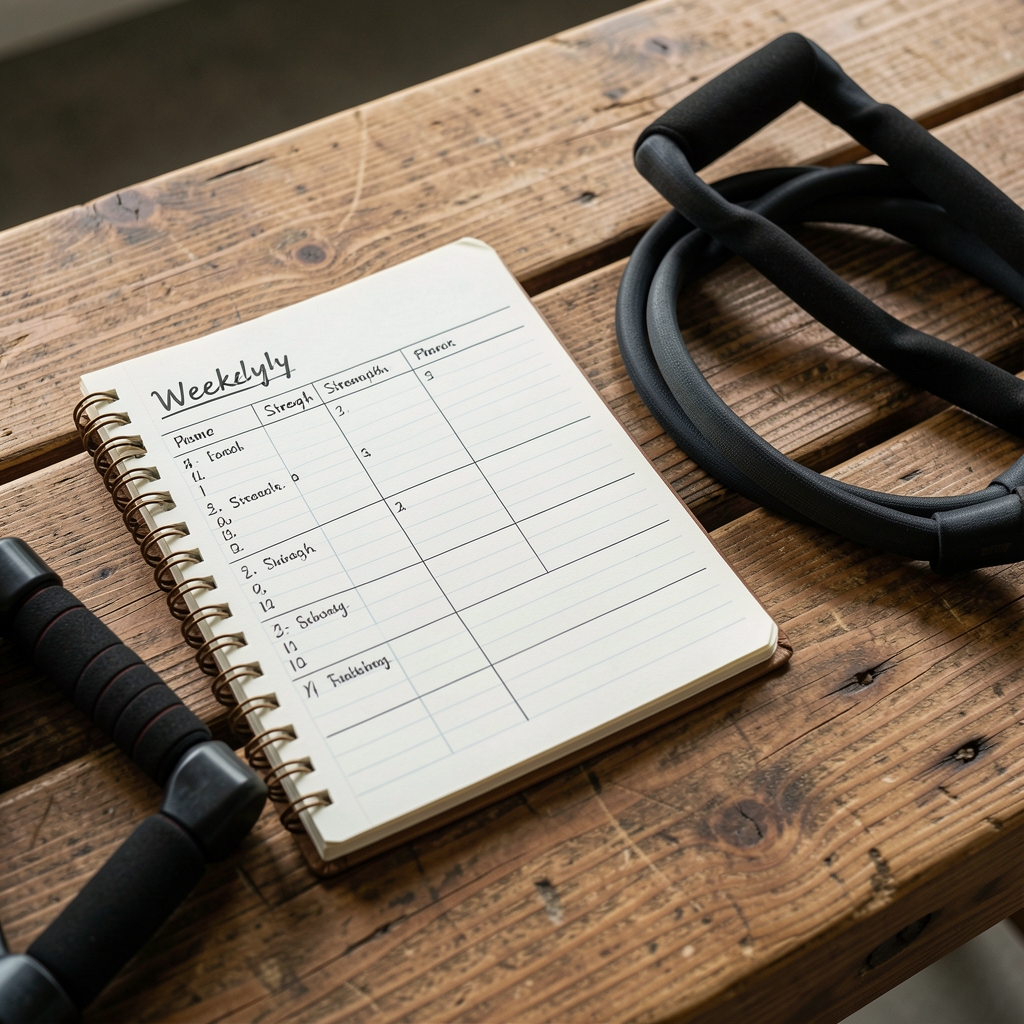
Strength training can mean many things: lifting weights, using resistance bands, practising bodyweight movements or carrying everyday objects with intention. For adults over 40, it is often less about a particular programme and more about maintaining a relationship with strength that feels safe, adaptable and rewarding. This article looks at the principles behind that relationship.
Resistance creates a useful signal
Muscles adapt to demands that are repeated with enough consistency. The demand may be light or substantial depending on a person’s starting point. The key editorial idea is progression: a movement can gradually become more controlled, more comfortable or slightly more challenging over time.
Choosing movements
A balanced session may involve pushing, pulling, squatting, hinging, carrying and stabilising. Equipment is optional. A chair, wall or band can offer a starting point, while a gym provides additional options. Technique and confidence deserve as much attention as the amount lifted.
Recovery belongs in the plan
Rest, sleep, food and ordinary low-intensity movement all shape how a person feels between sessions. More is not automatically better. A realistic weekly rhythm can include shorter sessions, rest days and adjustments when life becomes demanding.
Strength and body composition
Strength work can support muscle retention and function, while body composition also reflects food intake, activity outside sessions and individual biology. It is better understood as one component of a larger picture than as a promise of a particular appearance.
Building confidence gradually
The most useful routine is one that can still exist on an ordinary Tuesday.
Beginners may benefit from guidance on technique and progression. Anyone with an existing concern or uncertainty about movement should speak with a qualified professional before beginning a new routine.
Key takeaways
- Resistance can come from equipment or bodyweight.
- Progression may mean control, range or consistency.
- Recovery and flexibility support long-term participation.
- Strength is one part of body composition information.
This article is for informational purposes only and does not constitute medical advice. Always consult your GP or a qualified healthcare professional before making changes to your diet, supplements, or lifestyle. Graltov accepts no responsibility for actions taken without professional medical guidance.
Related reading
Protein Intake and Muscle Preservation · Why Body Composition Changes After 40